Author: Divya Prakash

  • e₹- CBDC- How? Part-1

    Now the big question-How?

    This is probably a multi-million-billion dollar question. There are so many dynamics at play here to keep in mind that it will require a very careful, deliberate, and intelligent approach to get this right. I will try to cover some of the dilemmas RBI will have and will also share some questions to which we don’t have the answers now. Would love to know your thoughts on this. I will try to make this a series of shorter, bite-sized nuggets.

    Let’s get started with the first of few. I guess you are aware by now that RBI kicked off the first pilot of e₹ with 9 Commercial Banks on the 1st of Nov 2022 (more about it here: https://economictimes.indiatimes.com/wealth/save/rbi-cbdc-digital-rupee-pilot-to-start-from-november-1-sbi-hdfc-7-other-banks-to-participate/articleshow/95205659.cms).

    We need answers to a lot of different questions before we can begin to visualize how the future looks to be. The larger questions are around the Distribution, Technology, Value proposition, Security, and Privacy of e₹.

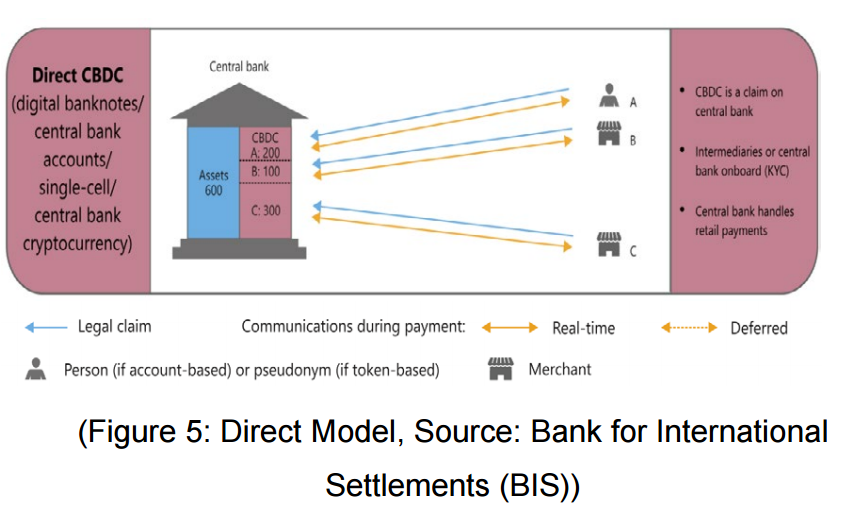
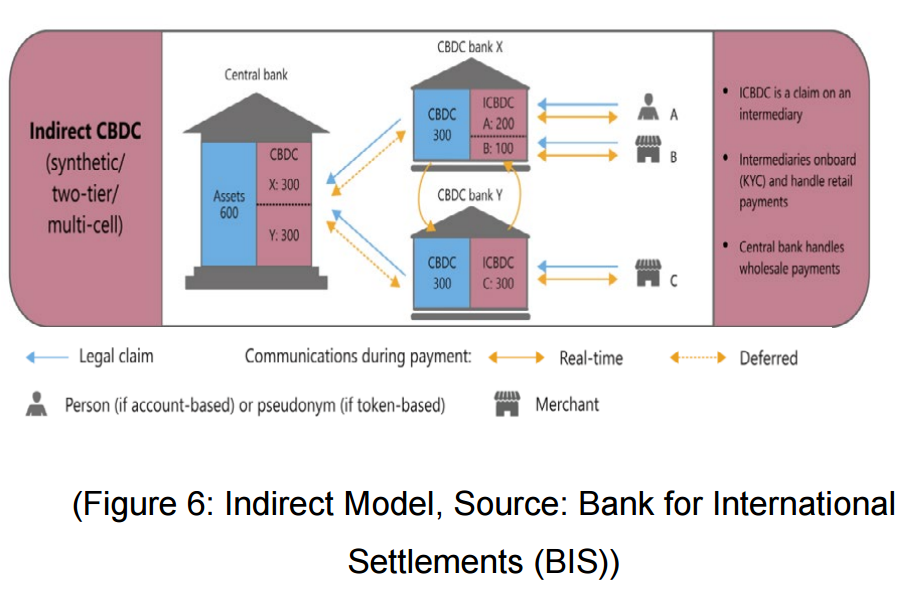
    Let’s see what we know and what to expect on these fronts. In terms of the market for e₹, RBI will have 2 avatars of its CBDC- e₹-Retail (e₹-R) & e₹-Wholesale (e₹-W). The pilot is underway for the e₹-W. As mentioned in the last post, under how e₹ is different from the rupee balance you see in your savings bank account (or payment wallet)- it is issued by the RBI and is their liability. Let’s run with that idea for a minute, if RBI decides to allow me & you to have e₹ account, that account needs to be opened with RBI directly! Can you imagine the kind of infrastructure (digital & physical) such an undertaking would require? Also, it would be so redundant, given that for all these years the Govt & RBI have been trying to get Banks to expand their franchise and now by offering e₹ they will essentially be leaving out Banks from the transaction flow. So this is Dilemma No. 1- if to keep the distribution central or distributed

    Dilemma No 1RBI’s AnswerRationale
    Should Distribution be Direct or Indirect?Both; Direct for Wholesale Segment and Indirect for Retail.Wholesale will not require the kind of infra a Retail distribution will need, in terms of Account/Wallet creation, KYC, AML Checks, etc.

    Image Source: RBI’s Concept Note on CBDC

  • e₹..CBDC?.. what’s that!

    CBDC has been a buzzword with RBI kicking off the pilot. I will try to explain the What, Why & How of RBI’s CBDC, which would be true for most CBDCs globally. In this first part, we will explore the What & Why of it and will do the How part in the following post. These posts will mainly refer to the concept document from RBI, released in October 2022 (https://rbidocs.rbi.org.in/rdocs/PublicationReport/Pdfs/CONCEPTNOTEACB531172E0B4DFC9A6E506C2C24FFB6.PDF), because that’s all there is when it comes to e₹.

    The first major mention of e-Rupee was in the Union Budget presented on 01st Feb, 2022. CBDC which stands for Central Bank Digital Currency is a global term used for legal tender issued by a central bank in digital form. e-Rupee is the name given to India’s CBDC.

    Let’s start with Why RBI considered coming up with its own CBDC. I see two primary reasons- the first is to bring about a reduction in cash circulation. Cash management- right from Cost (printing, distribution, etc) to logistics, is a costly and inefficient method that RBI is trying to disrupt (remember demonetization?..eh). The second and more pressing reason I am quoting it right from RBI’s note referred to in the opening para- As of July 2022, there are 105 countries8 in the process of exploring CBDC, a number that covers 95% of global Gross Domestic Product (GDP). 10 countries have launched a CBDC, the first of which was the Bahamian Sand Dollar in 2020 and the latest was Jamaica’s JAM-DEX.
    Currently, 17 other countries, including major economies like China and South Korea, are in the pilot stage and preparing for possible launches. China was the first large economy to pilot a CBDC in April 2020 and it aims for widespread domestic use of the e-CNY by 2023. 

    There is a reason why all countries are lining up in a hurry to come up with their CBDCs and it is what lies at the heart of the Blockchain/bitcoin revolution. The key word here is ‘decentralization’. As you might know, the primary motivation behind blockchain technology was the 2008 financial crisis and the general despise of the public against the ‘System’, which includes Banks- both commercial and central, Governments, etc. Thus, the idea of a decentralized currency was born of which Blockchain is the best-known example. While Bitcoin and many other such cryptocurrencies had a wild run since then, I have held a very strong opinion that no Sovereign will ever allow loss of control over Money! It is probably the most important control they have over the lives of their citizens and they will just not let it happen. Having said that, Blockchain technology will change the world (it already is..). I will save the larger discussion of Blockchain, Bitcoin, etc for another day. So in a nutshell, Governments/Central Banks don’t want a decentralized Crypto to grow which undermines their control. If you read the RBI concept note, there are more than sufficient words dedicated to explaining the oh! so very important functions the central banks undertake and how private cryptocurrencies pose a risk. Hope you can read what’s not spelled out. So that concludes my point on Why.

    Now let’s get to the What part. To understand what is CBDC/e-Rupee better, we should delve a bit into what is Currency/Rupee. Our fiat currency-Rupee acts as the following three-

    •        Store of Value
    •        Medium of payment
    •        Unit of Account

    So any new offering that tries to undertake functions of the Rupee, must fulfill the above 3 roles. I will straight get to the biggest question that I have had when I heard e₹ for the first time and I presume most other people would have the same question as well- How is it different from the money in my Paytm wallet or my savings account balance in my Kotak Mahindra Savings account? The key difference between the two is-

    CBDC is issued by the Central Bank just like the physical rupee, whereas the balances we see in our accounts with Banks or wallets are provided by the Commercial entity we are dealing with. Simply put, the balance in Paytm wallet is as good as Paytm whereas the e₹ is as good as RBI. You can extend the logic to answer your specific case. All other differences stem from this key difference-

    1. e₹ is the liability of RBI whereas others are the liability of their respective institutions. 
    2. e₹ will only carry sovereign credit risk, whereas the other also carries counter-party risks (Settlement risk, solvency risk, etc).
    3. e₹ account will be maintained with the Central Bank whereas the other (digital rupee) is held with commercial banks. (There is one finer point to keep in mind that we will note in the next post on How.  

    Hope I have been able to answer some questions about the Why & What that you had. Will follow up with How, in the next post. 

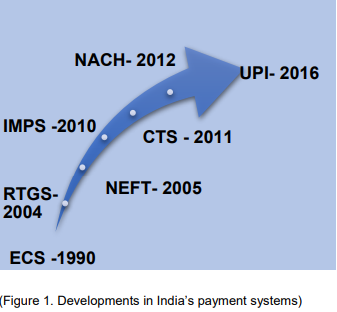
    Side note- the most unimpressive way to depict an impressive feat is straight from RBI’s concept note:

    Screenshot_20221112_204720

  • What is this Card Tokenisation?

    You would have come across this term ‘tokenisation’ on all e-commerce checkout pages. In case you, like me need some visual anchors to develop understanding and still don’t know what is this card tokenisation- this might help.

    In its bid to improve security of Card transactions, RBI rolled out tokenisation norms on Jan 08, 2019 (Ref: RBI/2018-19/103 DPSS.CO.PD No.1463/02.14.003/2018-19). It came into effect finally on 1st Oct 2022.

    So let’s understand first what is tokenisation. In simplest of words it is sort of having an alternate code generated for your card details so that they can be transmitted from merchant, Payment gateway to Card network more securely. Basically, preventing your actual card details travelling over the network between various entities (Merchant, Banks, Payment Network etc) every time you make a payments.

    Now with the basics out of the way, let try to understand- How does Tokenisation happen?

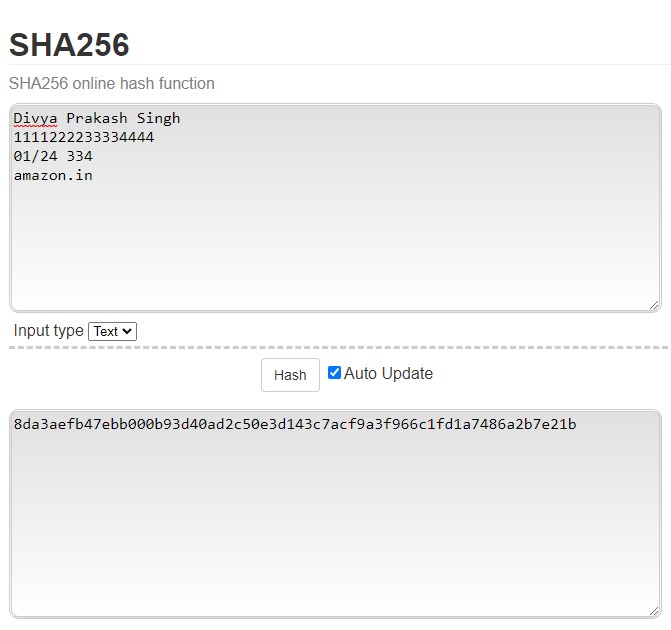
    The information that every time your merchant transmits through the Payment Gateway includes the following identifiable: Card holder’s name, 16 digit Card no, Expiry/Validity, CVV no, Merchant/platform. Through tokenisation all these information are converted to a single code using an algorithm by process called Hashing (very similar to the world of Blockchains & Bitcoin..more on that in posts later).

    As simple as this!

    One such algorithm is SHA-256; just land on this page https://emn178.github.io/online-tools/sha256.html and have fun with it. If you spend some time playing around you might notice some of the most important facets of this process and why is the world so enamoured by this new tech. Will come back to this later in the post; for now back to tokenisation. Now in the process lets assume, you agree to tokenise a Visa Card with Amazon.in. Amazon will request for the token with the card information that you entered on the website. From now on Amazon will only store the last 4 digits of teh card to help you identify in case of multiple tokens and the Token itself. In short, merchants will no longer store your card details and it will only be available with the issuing bank. The issuing bank will be able to match the token coming in from a merchant with the token they have on file and if both match, the transaction goes through..Simple!

    Now coming back to the features of this Token and what makes it so secure:

    • You can generate token from the card details but you can’t get back the card details from the token; isn’t that fantastic!!
    • A very small change in the input makes a significant change in the token, thereby making it very easy to identify tampering during transmission.
    • Irrespective of the input data, teh output in SHA-256 is always 256 bits long, equivalent to 32 bytes, or 64 bytes in an hexadecimal string format.

    On the first feature, you might ask- well what if someone cracks it. So, hashing is not an encryption hence you can’t decrypt it. It is a simple one way process (hashing is ‘not injective’ is you want to get technical). Even then, let’s say you just love probability so much that you do need a number. So this is how it goes- assuming the output has only nos. and lower case alphabets and you could do a million tries every second, then how long it would take someone-

    36 character in set
    64 number of characters
    1,000,000 attempts/second
    ~315,36,000 seconds/year

    ((36^64)/100000000)/31536000= 12,700,000,000,000,000,000,000,000,000,000,000,000,000,000,000,000,000,000,000,000,000,000,000,000,000,000,000,000,000 years.

    So let’s just agree that it’s pretty secure. Hope this answers some of your questions, feel free to ask if you have more- we will try to find the answers together.

  • Privilege Banking Redefined

    Our idea of classic privilege banking is that the bank comes to the door-steps of the rich to deliver services. How would you react to the latest developments in financial inclusion where an agent comes to your door-step to deliver various financial services like credit, savings, RD, insurance, and other services like mobile, DTH recharge, rail/bus ticket bookings, payment of insurance premiums etc? And hold.. we are talking about these services in a rural backdrop, where ferrying to and from the branch would sometimes cost about the average ticket size of the transaction itself. (You should be surprised only if you don’t know about RBI’s BC initiatives). If you are not amused please proceed no further, because you will be just wasting your time 🙂
    In recent times RBI has made more concrete moves towards achieving financial inclusion, one of which is introducing the BC (business correspondent) model, for places where having brick-mortar branch is unviable for banks. RBI’s aim? – is to make banks reach places having a population above 2000. Banks appoint BC agencies/service providers in these areas, who on behalf of the bank provide these services in the hinterland. This development is in economic favour of banks too- estimates show that cost of a transaction at a typical bank branch costs the bank somewhere around Rs 60, and given the small average size of transaction in rural areas it becomes unfeasible for the bank to set-up a branch at these places. Going via the BC route the bank incurs a much lower cost per transaction. For the customer, he/she gets the service at his/her doorsteps without any branch visiting costs. So naturally, it looks to be a win-win situation for the bank as well as the customer (Having said that, we have to remember that banks are being told to do so. If they had their way it would’ve still been a long time before they reached these places, but that’s what regulators are for, isn’t it?).
    It sure looks like privilege banking being delivered to the bottom of the pyramid (long live Dr. Prahlad). Now, the people who make it possible- the BC service providers. It’s a market that is growing at a phenomenal rate, it already has quite a few players like FINO, Eko, ALW (Please don’t get me wrong- I’m not getting paid for this 😉 ). These players try to leverage technology to reduce the transaction costs, and the kind of technology they employ to make this happen is really impressive. Well, you might not find it as impressive if you haven’t been to any of the place where these services are being delivered; I mean it’s really a tough task to imagine its extent if you don’t have the first hand experience of being in an regular rural set-up at least once. The bouquet of services/products being offered through this model are already pretty much all the essentials, and its set to expand furthermore as these players try to leverage their existing infrastructure of agents & technology in place for maximum benefit. Seems finally something is happening somewhere..will it help invert the pyramid? Only time can answer that 🙂

  • The Law of Evolution- Survival of the Largest ?

    As the central bank in its pursuit of achieving 100% financial inclusion keeps commissioning various committees, the landscape new age MFIs operate in is getting more and more dynamic. Well, what do we have today? –the recommendations made by V. K. Sharma Committee ( V K Sharma is the senior most executive director and the favorite to succeed Usha Thorat as the deputy governor at RBI).

    In November 2009, a Working Group was constituted by The Reserve Bank of India under the Chairmanship of Mr. V. K. Sharma to examine the pros and cons of the Priority Sector Lending Certificates (recommendations about which were made by the Committee on Financial Sector Reforms, chaired by Dr. Raghuram G. Rajan), and to make recommendations on introduction and trading of the PSLCs in the open market. Later, RBI in its 2010-11 monetary policy report expanded the scope of the working group and mandated them to review the pros and cons of inclusion of bank lending to micro-finance institutions (MFIs) under priority sector lending. This is where the problem started 🙂 . The group was supposed to submit its report by June 2010, which has not yet happened. The group however has submitted a draft report on its findings and recommendations (ET report)

    The recommendations as reported are-

     Bank’s exposure to Non-Banking Finance Company (NBFCs), having priority sector status should be withdrawn.

     The phase out period should be orderly and therefore should be allowed up to 31st March, 2012.

    Now, we will try to see what could be the implications if the recommendations made are endorsed by the apex bank in its entirety.

    The committee says since it could not be ascertained whether the loans extended to MFIs under PSL reach the poor, so banks should discontinue lending to MFIs under PSL. As of March’09 the loans extended by Pvt & public sector banks to all the MFIs aggregated to about 3/4th of the entire debt funding available to these institutions, so the impact of this recco is well understood. As of now banks lend to MFIs to meet their PSL targets (remember the 40% target?) as required, failing which RBI guides them to park an amount equal to the shortfall with institutions like NABARD, SIDBI etc, which yields a meager ~6% return. You might think this PSL thing might help MFIs to get a good bargain at the interest cost, well that logical too but it doesn’t happen at all! Going by the numbers the flag bearer SKS reports the cost is around 12% for them (that’s around 200-300bps costlier than what large corporate houses pay on a purely commercial borrowing), needless to say this number hits north as the size of the firm decreases. Now if this lending is excluded from PSL it will simply increase banks’ bargaining power, so the interest charged is bound to increase. This might be passed on to the customer by the MFIs which will push the dream of financial inclusion farther. Still worse, it might make it impossible for start-up and other growing MFIs to borrow at all, if that happens the microfinance market will never see competitive pricing as much it could have.

    If this happens the large MFIs might still be able to protect their margins owing to their scaled-up operations, better bargaining power with banks etc, but smaller MFIs might just get wiped off making the market more inefficient.

    The Rationale

    To my limited understanding its very challenging to find a good reason how-

    – On one side people (no names 🙂 ) complain about how the interest rates of MFIs have not come down as they should have, and on the other side we are talking of steps that will essentially translate to an increase in the borrowing cost further to ensure that the kind of competitive market place required for charges to come down is never achieved!

    – WE say MFIs charge astronomical interest rates, and that they are wrong citing high operating costs as the reason as lower delinquency (98%+ recovery rates) should offset the higher operating cost. At the same time it’s OK for banks to charge MFIs higher interest rates on the grounds of riskier business model, why is it that the same argument of lower delinquency is no longer valid?

  • Financial Reforms & MFIs

    Financial reforms that the government is trying to bring in are going to affect MFIs like all other financial institutions in some or the other way.  Among the major recommendations in the last report on financial reforms banking license to NBFCs & PSLCs are the ones which I think if implemented will affect MFIs most significantly. Banking license is still self explanatory, so I will try to find out what is this PSLC we are talking about.

    Priority Sector Lending Certificate..what is it??

    The idea was born in the abovementioned 2008 report of the Committee on financial sector reforms titled- ‘A Hundred Small Steps’ better known as the Raghuram G. Rajan committee report.  The committee came up with a very novel idea to help implement the priority sector lending mandate more efficiently. It suggests that all registered lenders be issued certificates for the amount they lend to the eligible priority sectors. Then a market would be opened up for such certificates, where the deficient banks can buy these certificates for the amount they are falling short by. However, the loan will remain on the books of the original lender and any default in the loan will affect the lender only and not the certificate holder. For those who know will find it much like the CERs or the carbon credits..Indeed it is, in many aspects.

    The million $ question..how will these certificates be priced?

    The price obviously will be less than the penalty faced by the banks in case they fail to achieve their target & sub targets. The actual price discovery will be done by the market.

    So why is it important for MFIs??

    At the heart of the proposal of PSLC lies the idea to make PSLC a market-driven interest subsidy to those who make priority sector loans. The income from selling these certificates is what will make lending more profitable for lenders. So now we can see how MFIs stand to benefit, especially the large MFIs will be the largest beneficiaries as these certificates will have some minimum size regulations, also only they can be of help to large banks who will be looking at some serious volumes of PSLC.

    The way I see it, if PSLC are introduced it will be the next big thing for major MFIs. We might see upsurge of many specialized institutions in priority sector lending which will try to thrive on this initiative. Whatever may be the consequence for the institutional participants, it will surely go a long way in benefitting the end customer, the borrower and will push us an inch closer to what we aspire to achieve- ‘financial inclusion’; cheers to that! 🙂

  • Banks & Priority Sector Lending

    As we know the commercial banks have to meet the RBI guidelines of 40% net advances of their Adjusted Net Bank Credit to the priority sectors. In case you are wondering what all sectors come under this ‘priority’ list they are- advances for agricultural sector, small & micro enterprises, retail trade, education, housing, Differential rate of interest scheme (there are various sub-targets apart from this overall 40% as well, but we won’t get into those details now). In case a bank fails to meet these targets they face penalty which is- Contribution by banks to Rural Infrastructure Development Fund (RIDF) or Funds with other Financial Institutions, as specified by the Reserve Bank. The term, interest and size of such deposits are dictated by the central bank from time to time. In logical conclusion the returns from such deposits are not favorable for the banks and so they try to avoid it, you will see banks going on PSL spree in the last quarter of the year trying to close down the gap.


    So the question is why do banks have to struggle to meet these targets & sub-targets, why don’t they lend enough to these sectors themselves??

    The Raghuram report on financial reforms identifies the reasons as-

    “Interest rate ceilings (either imposed by the centre or the state) make priority sector lending unprofitable, and ensure that the banker attempts to recover his money through hidden charges in the loans that are made, or that he does not lend so the poor are driven to the moneylender. The Committee believes a better way to proceed is to liberalize interest rates while increasing safeguards that prevent exploitation.”

    The committee goes further to recommend

    –          Liberalization of interest rates charged on these PSL to ensure that the credit reaches the poor.

    It also suggests having a system in place, to ensure-

    –          Lenders disclose the total cost being charged on such advances

    –          Periodic public disclosure of maximum and average interest rates charged by the lenders.

    –          Only loans that stay within a margin of local estimated costs of lending to the poor be eligible for PSLCs.

  • The Land of Darkness

    This story is from the land governed by narcissists, it may be true for few other states of the country as well, but I speak for the one I have firsthand experience with. Country’s most populous state and in what state! ; The account here is from the eastern most part of the state, where overwhelmingly large part of the population is dependent upon agriculture for their livelihood.
    In the present when we as a country boast a stupendous record of an impressive GDP growth rate year after year for close to one decade now, the situation here is quite disturbing. To my understanding, power is the ‘most’ important resource or growth enabler for growth, and mind you this power is not the power that the people of this land are more bothered about, this is the power that runs industries but as unfortunate as it is, people here are much more active about the power that a democracy like ours bestows upon the elected representatives. I think power is most important because other infrastructure will come in as and when the demand comes, but without power you would never see the demand come in.
    We often talk about growth for now forget growth, this district has seen degradation of basic infrastructure in the past. Till some 10 years back the average electricity supply was about 16hrs a day which has dropped to a near 12hrs a day, that is the kind of ‘growth’ we are talking here. The district even saw its MP rise to become the PM for a short stint, but all that to this consequence! Governments came and went while the district slowly and quite steadily slumped into worse states, while the representatives the people selected were busy building their own empires. Of course the people themselves are at fault, they themselves don’t know their priorities, otherwise how can one explain a political party that blows thousands of crores of state government funds on building parks with statues of animals (elephants & few others :-P..I wonder if you get the joke) still continue to run the government without any problem. That kind of money was big enough to lessen the power deficit the state has, not by a large quantity but intent wise would have been big enough. It’s amusing how such thoughtless, shameful projects are implemented so fast when the ones those are needed never see the light of the day.
    I know people who think its unimaginable to have long power cuts in summers, infact for that matter most of my Google generation doesn’t actually know what its like to live without power..an odd day’s power cut doesn’t even come close to what it’s like to live in a place which has electrification just for the sake of records. Have you ever wondered how would it be to live in such a place? Well right now I am in one such place, thankfully I am one of the very few fortunate ones around as we have all possible means of power generation, gensets, solar panels, invertors etc. but not all have access to such facilities, infact this district has a population of more than 30 lakhs which survives on an upto* 8 hrs of electricity supply a day! The kind of electricity that is wasted every day in lighting up these stone parks built across the state could very well be used to power many such villages in the same state.
    Some people in the towns are willing to pay any price to ensure uninterrupted supply, but not all can afford that. All this breeds resentment, people don’t pay electricity bills…in fact the number of legitimate electricity connections is very very low as compared to actual nos. The state power boards are sick, but this vicious cycle has to break somewhere. It’s no brainer to guess that the government can only initiate any such major shift of state, but unfortunately the political parties in power don’t have the political will to take steps like privatizing the distribution & billing of power at least. You can very well argue that privatization is not the end of all problems but I know one thing for sure, right now I have access to the internet(GPRS based), but no electricity!, thanks to the private telecom companies. Also, it is working great in most of the places and so I have no reason to think otherwise. Even in the power generation space Pvt. players are awarded projects but they face far too many hurdles unlike that in construction of parks across the state, strange isn’t it? What is more amusing is how these very electricity boards manage to provide almost 24hrs electricity supply in the same areas when elections are around the corner..Power of democracy! Isn’t it?? 🙂
    P.S: For record the place I am talking about is Ballia, Uttar Pradesh.

  • Funding the Microfinance Biz

    Moving on to the next level..we will now try to see how do these Microfinance companies manage to fund their business. This will involve both the fields which I am passionate about- micro & corporate finance :).

    Looking at the Indian scenario to find out the answer, one thing that stands out is that in the last two years, the five largest MFIs in India have been beneficiaries of approximately $180mn in private equity investments! and their combined client base during the period grew at an annually compounded rate of 45% .

    Now, why do they need private equity after all- Corporate Finance-101 will tell you that a company can’t fund itself solely by debt beyond a certain level. The increasing leverage will increase the cost of capital substantially. So beyond a certain stage the business needs infusion of fresh equity, since the promoters are not in a state to fund it by themselves, they also have not yet achieved the scale to be able to go public- so they turn to the only plausible option left, that is private equity.

    The private equity investing in microfinance is mostly in the form of early start-up or growth capital. This is different from the prevalent practices in the developed world in the way that otherwise private equity players are over-leveraged in the pursuit of short-term exit & return. However in the case of investment in MFIs they partner them for a longer duration as still its a long time before these investments will mature giving them an option to exit.

    An increase in inflow of such funds will not just help the sector to scale, but will allow greater transparency. The kind of corporate governance requirements of these investors will inevitably result in stronger organizations.

    On the contrary, despite the positives such investments, some people still criticize private equity backed MFIs for their rapid growth rates. Their concern is that in the pursuit to scale up fast these PE funded MFIs will compromise the quality of the loan portfolio. To my understanding that is not a problem, as a default ridden portfolio, no matter how large it is, is of limited use to the MFI as well as the PE firm, especially so amidst the current financial crisis. Also people often accuse PE backed MFIs to be driven only by profitability, now that comes from the school of thought that believes microfinance to be just a kind of social service. I will again repeat what I ve already said about microfinance- ‘it is about doing well, by doing good’. No business can sustain & scale up without having a financial business sense to it. We have to understand that grants can’t keep driving microfinance forever, they have to be profitable for them to scale-up & be able to provide the service to a larger base.

  • Microfinance & the way forward…

    The term Microfinance refers to small-scale financial services- both credit & savings, provided to the poor in rural, semi-urban & urban areas. The service providers in this space are banks, insurance companies, agricultural & dairy co-operatives & MFI s (Micro Finance Institutions) etc.

    Since MFI s don’t have a banking license, they can’t take deposits which prevents them from offering the savings facility. So largely the savings facility in micro-finance is provided by banks only as of now. In fact in India microfinance is synonymous to micro-credit, the reason behind is that savings, micro-insurance etc comprise a very miniscule segment of the microfinance space here.

    Now what is the definition of a micro-loan?

    The Development & Regulation bill 2007 defines Microfinance loans as loans with amount not exceeding Rs 50,000 in aggregate per individual/enterprise. However, in practice most micro-loans are in the range of Rs 5000- Rs 20,000.

    How big is this market we are talking about?

    The microfinance sector and MFIs in India are estimated to have outstanding total  loans of Rs.16,000 crore to Rs.17,500 crore, and Rs.11,000 crore to Rs.12,000  crore,  respectively,  as  on  March  31,  2009.  The microfinance sector in India is fragmented – there are more than 3,000 MFIs,  NGOs,  and  NGO-MFIs,  of which  about  400  have active lending programmes. However the good thing is that the top 10 MFIs account for about 74% of the total outstanding.

    In the past the microfinance industry in India has witnessed astounding growth. One of the measures- the total loan amount outstanding has grown from Rs 1600 crore in March’06 to an impressive Rs 11,400 crore by March’09! (We hope it grows even faster going forward so as to fetch us all PGDM-DSF students at IFMR a worthy job 🙂 )

    Understanding MFI s Better-

    MFIs according to their lending model can broadly be classified under two heads- The ones lending as per the SHG(Self Help Groups) model & the ones lending as per the JLG( Joint Liability group) model. Now we will try to chalk out how these two models are different-   Under the SHG model the MFI lends to a group of 10-20 people( women essentially in the present Indian context). Under the SHG-bank linkage model, an NGO promotes a group and gets banks to extend loans to the group. Under the JLG model,  loans are extended to, and recovered  from, each member of the group  (unlike under  the SHG model, where the loan is extended to the group as a whole). The most  popular  JLG  models  are  the  Grameen  Bank  model (developed by Grameen Bank, Bangladesh) and the ASA model (developed by ASA, a leading Bangladesh-based NGO-MFI). Most of  the  large MFIs  in  India  follow a hybrid of  the group models. 

    The model of  lending  to  individuals  is similar  to  the  retail  loan financing model  of  banks.  In  India, MFIs  adopting  the  group-lending  models  extend  individual  loans  to  more  successful borrowers who have  completed a  few  loan  cycles as part of a group  (who have  relatively  large credit  requirements and good repayment track record). Corporates and cooperatives, typically dairy  farms  and  sugar  mills,  are  also  known  to  undertake
    microfinance  by  extending  credit  to  farmers;  this  helps  the companies  strengthen  their  procurement  and  distribution channels. 

    Now coming to the what I call the not-so-pleasant part of MFI operations 🙂 – the interest rates charged by these MFIs.

    MFIs  following  the JLG model charge  flat  interest rates of 12  to 18%  on  their  loans,  while MFIs  following  the  SHG model charge  18  to  24%   per  annum!!  based  on  the reducing  balance method.  In  addition  to  interest  rates,  some MFIs  also  charge  a  processing  fee  comprising  a  certain proportion  of  the  loan  amount  sanctioned,  at  the  time  of disbursement. I know we all couldn’t agree more on that these interest rates are bit too high for the poor people we are serving. But if I may take the liberty to leave the complete humanitarian point of view and draw your attention to the MFI as a business..like any other business ( remember this business about doing well by doing good 🙂 ) we should see that the cost of loan disbursements in the case of MFIs is higher than a bank, also the risk involved( as no collaterals) is also on the higher side. So we can’t just blame the MFIs for leaching on to the poor..afterall they are still doing some good work, and so no reason they should be deprived  of their credit, that they rightfully deserve.

    We know that this sector has grown multitudes in the past..so what does the future hold for MFIs?

    Well, the way I see it- taking SKS as the flag bearer of the industry ( I guess it’s not a vague assumption, after all it account for about 25% of loans outstanding alone!) – it’s cost-of-capital stands at 9.58%(sep’08), charges 23.6% in Andhra & 28% in other states!..it has a very healthy margin to operate in. Most if not all the MFIs are highly leveraged, now once SKS goes public for funds (which it plans to do in the current year) it will be able to de-leverage it’s financials considerably, bringing down the cost-of-capital. A reduction in cost of capital keeping other factors constant will surely provide the company a cushion in operations and profitability.

    Also, I expect that going forward the MFIs will get a banking license ( well not all, but I hope a few big ones do). That will be the turning point in terms of reducing CoC, and probably then only we can expect the MFIs to charge a lower interest rate from the people. Looking at the way banking system in India is regulated it’s very unlikely to happen any time soon, but that is what I think can bring about the next big revolution in the MF industry, and so I sincerely hope it does.