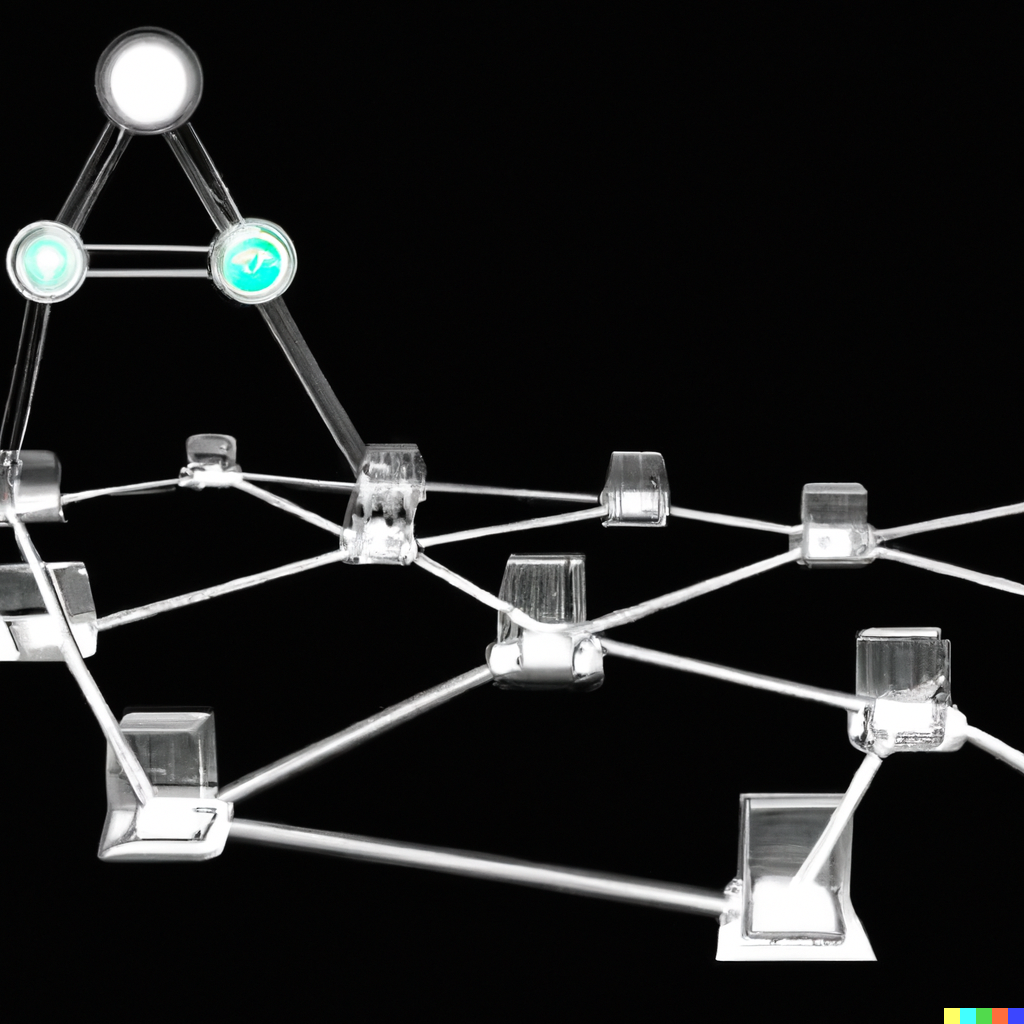
Picking up from the last post let’s look at some of the solutions to this trilemma. All solutions try to optimize one or more of the 3 elements- decentralization, security, and scalability.
One solution comes from optimizing the nodes. But first, what is decentralisation?– Blockchain networks like Bitcoin are designed in a decentralized nature such that there is no central authority, organization, or body in charge of network functioning. The network layer is available for anyone who wants to participate in the Blockchain. Thus the control of the network is fully distributed among participants rather than a single entity. Everyone on the Blockchain has access to the data on the chain, and if anyone tries to change the functioning or records to cheat, the participants have the vote to reject the data found at fault. Let’s take the example of the Bitcoin network to avoid technicalities in understanding decentralized architecture. No third party controls the Bitcoin network, unlike the traditional financial system in conventional banks. The third-party controls record to ensure that data is managed correctly and that transactional parties keep their transaction records safe.
On the other hand, the Bitcoin Blockchain allows everyone on the chain to access the data and cross-check transactional records before these records are added to the digital database. This way, Blockchain technology creates a system without intermediaries to control the network and enforce trust between participants. However, transaction time increases in Blockchain networks as all the participants on the chain do data validation, and sometimes it can be slow due to how data is processed and shared on the Blockchain. (Source: https://www.blockchain-council.org)
In a typical blockchain, all the nodes should be full nodes i.e. all nodes should have a complete independent replica of the chain and validate blocks and transactions. This is key to the chain being truly trustless and decentralized. We have already seen that since a blockchain, unlike an internet database is an append-only architecture, with time it becomes too large to have lots of nodes committing that kind of disk space. (for eg: a node of blockchain required about 400GB of disk space as per Statista, by mid-2022). To overcome this developers have come up with a solution where in instead of a full node you have a lightweight or partial node. Such nodes only keep the block headers instead of full blocks, to save on disk space but of course at the cost of decentralization (optimization problem..remember?). It is desirable to have more full nodes than light nodes in a blockchain. There are other variants and all types of terms which are some variant of a light node- such as Pruned Node, Sharding, etc. In the next one we will look at some other such solutions.
Leave a Reply